
NTC Service. from hijacked domain to organic traffic
AI optimization Turnkey CRM integrations SEO
About the project
Business
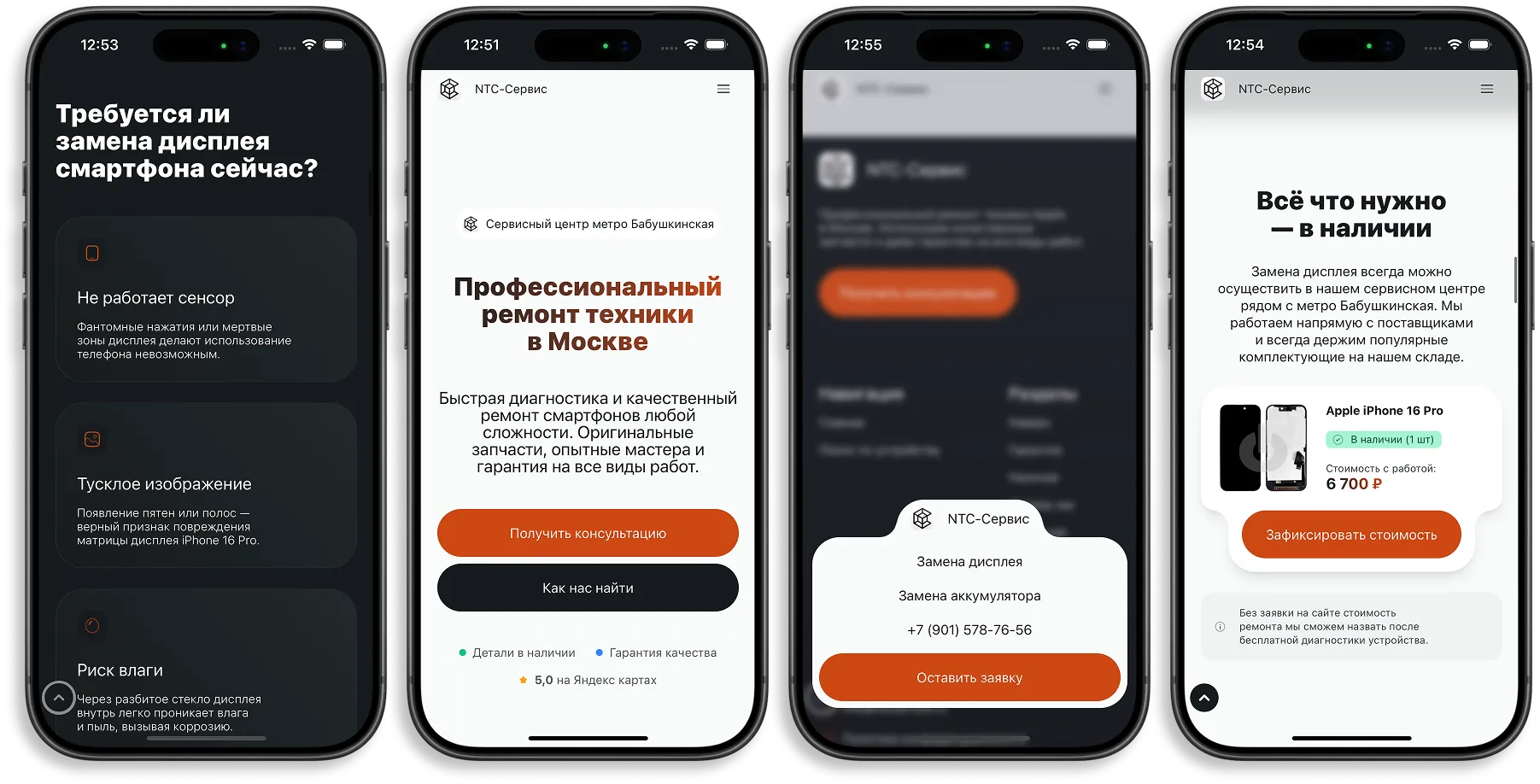
NTC Service is a service center that repairs mobile devices.
The situation
The client's website had been offline for more than a year: the domain was hijacked, and a 301 redirect was placed on it pointing to a Japanese online store. In the eyes of search engines, the domain was firmly tied to someone else's resource — link equity had leaked, the index had been rebuilt around foreign content, and trust in the domain was gone.
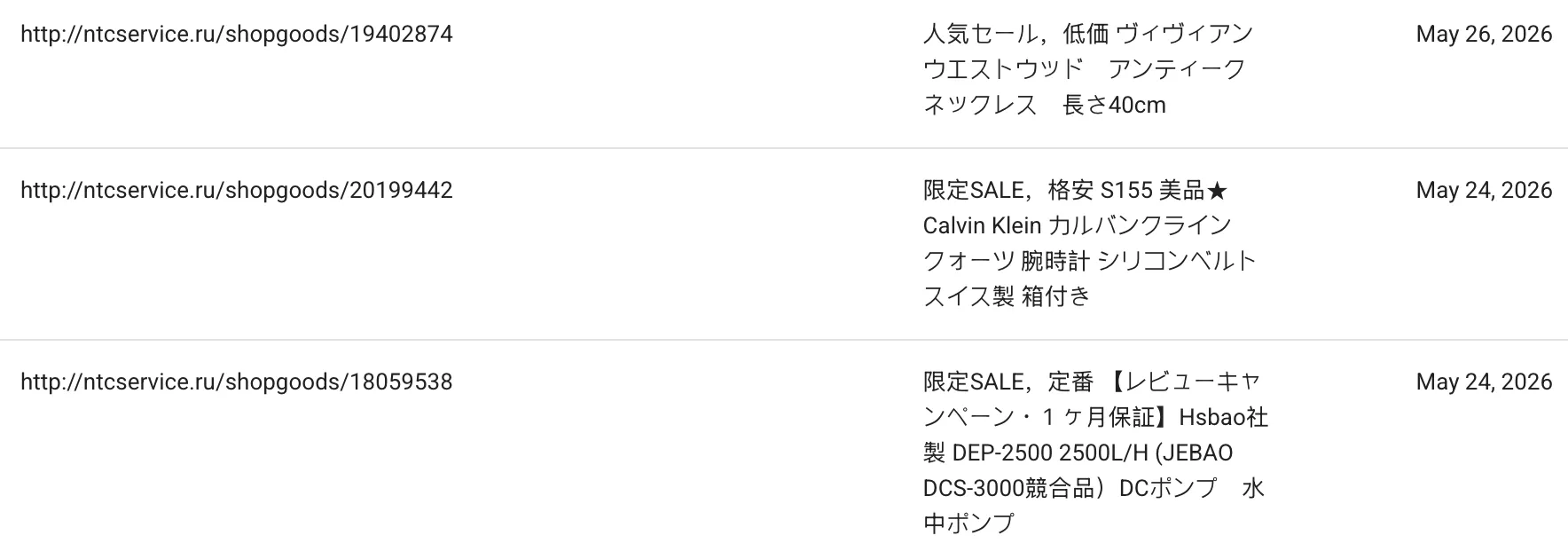
So the task wasn't about "launching a website" — it was about rehabilitating a domain with a poisoned history:
- Regain control of the domain and remove the foreign redirect.
- Convince search engines that the domain belongs to the service center again.
- Rebuild the site and its indexation from scratch on top of the domain's old history.
The goal
Attract direct, organic traffic to landing pages that describe the service for a specific device model.
Enable on-site request submission, CRM integration, and Email/Telegram notifications.
The solution
- Connect CRM data and integrate it into the website, then generate pages for models and services.
- Optimize the site for chatbots by generating parallel pages in Markdown format.
- Build high-quality structured data to attract traffic.
Results from scratch
Week one
Over 1000 landing pages indexed

Week three
With clean domains typically taking 3–6 months to first results, the first lead arrived in week three — from a ChatGPT chatbot
Case study updates
Publishing the dynamics after months 3 and 6: traffic, leads, rankings.
Get a consultation
The process
Design
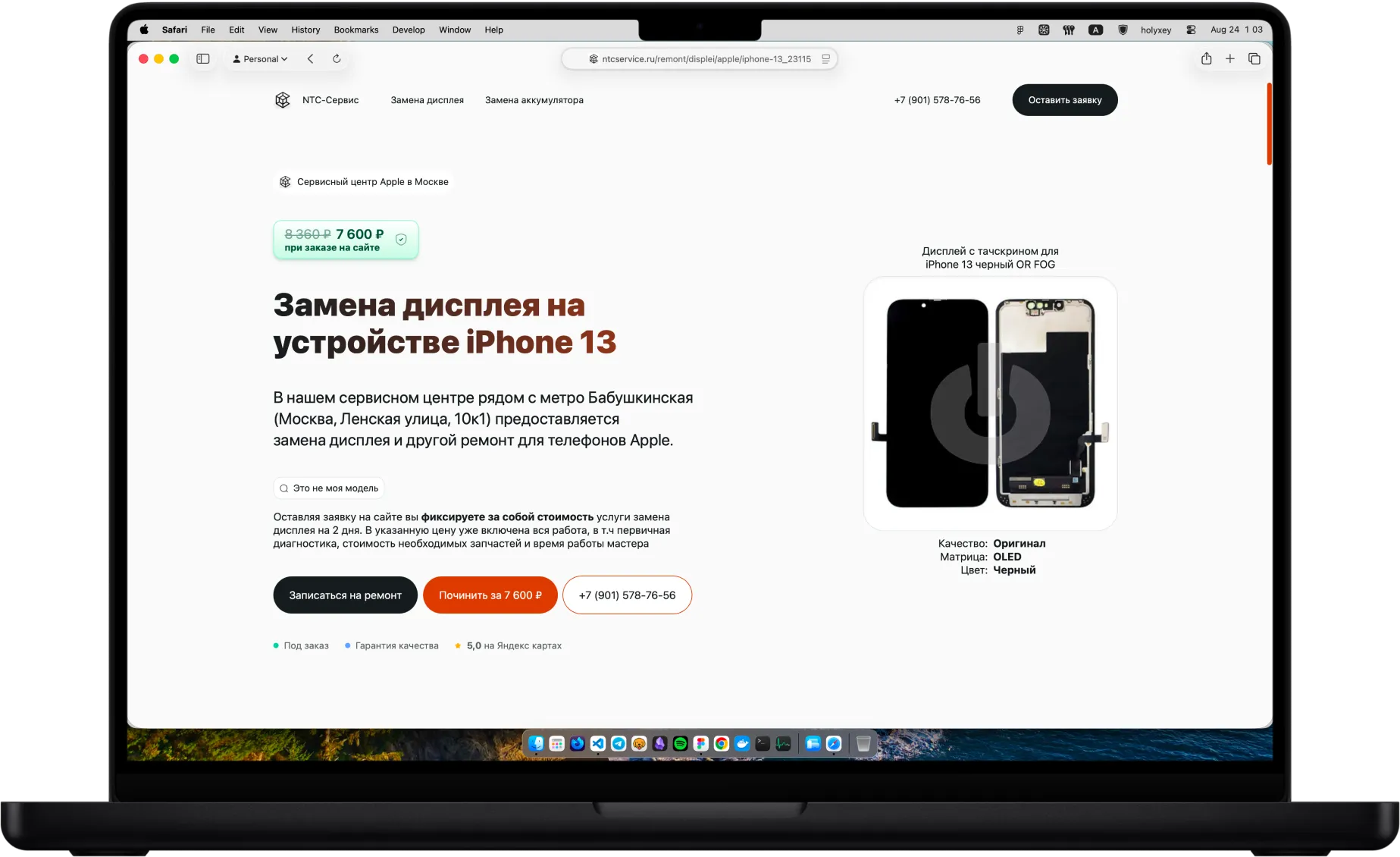
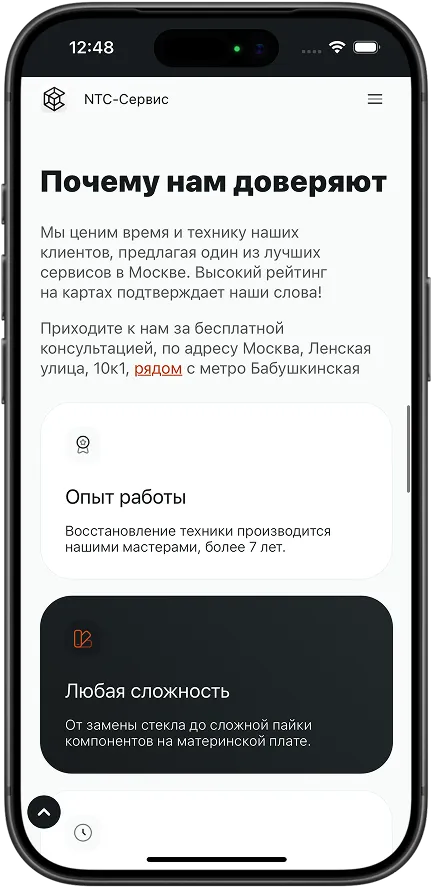
Design prototypes were generated with neural networks. Along the way, language model stacks such as Kimi and Deepseek were used, with the final prototype assembled in Figma Make (Claude).
After approval with the client, the resulting output was refined to a state ready for development and further evolution.
Development
| Frontend | Backend |
|---|---|
| Nuxt 4, Vue 3 | Bun 1.4, Postgres, Redis |
More details
The reasons behind the technologies and tools I use are covered in depth in the about me section
Describe your project
Search engine optimization
Technical work
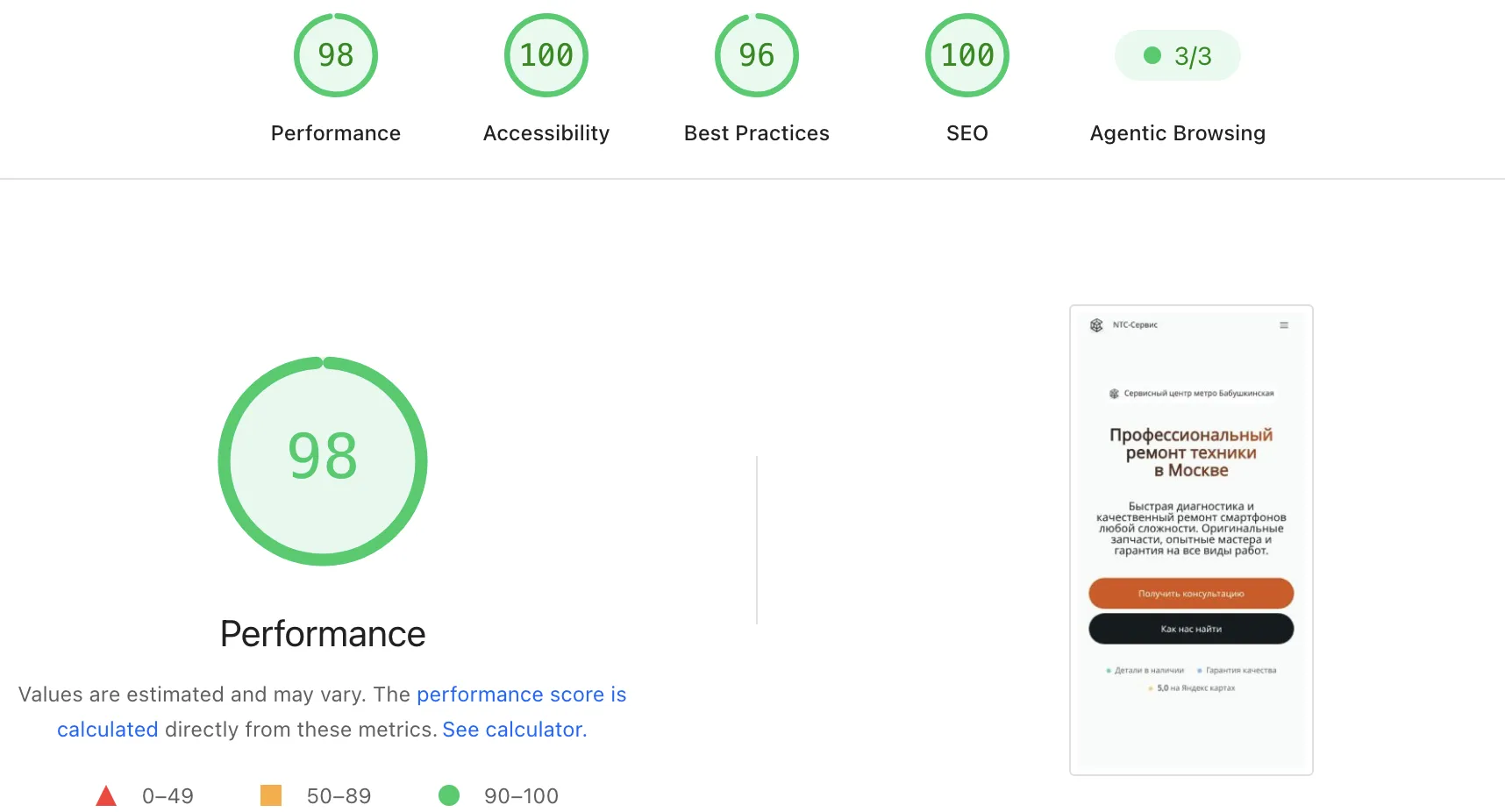
I build technical optimization into the foundation of all my work for two reasons:
- First: user experience. The site must load quickly and let visitors complete key actions — even on a slow connection.
- Second: the synthetic tests of search engine crawlers, which score site performance and directly affect indexation.
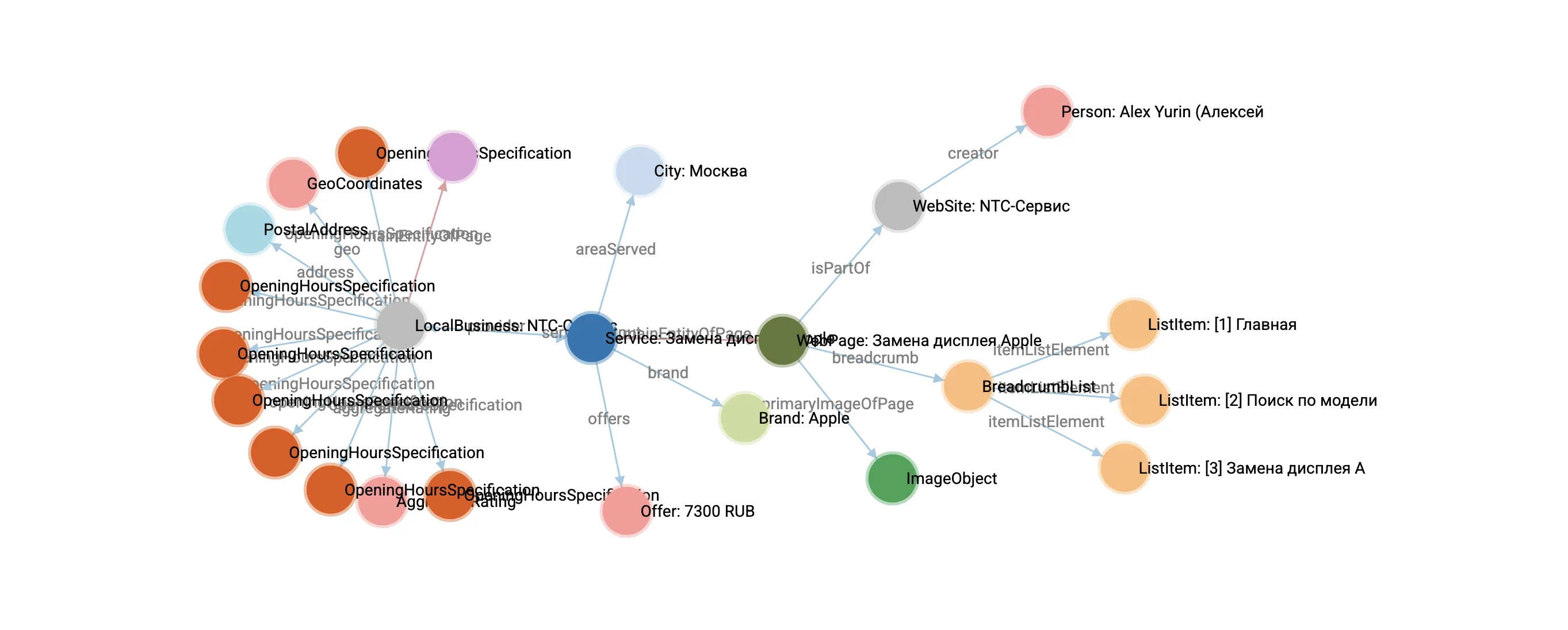
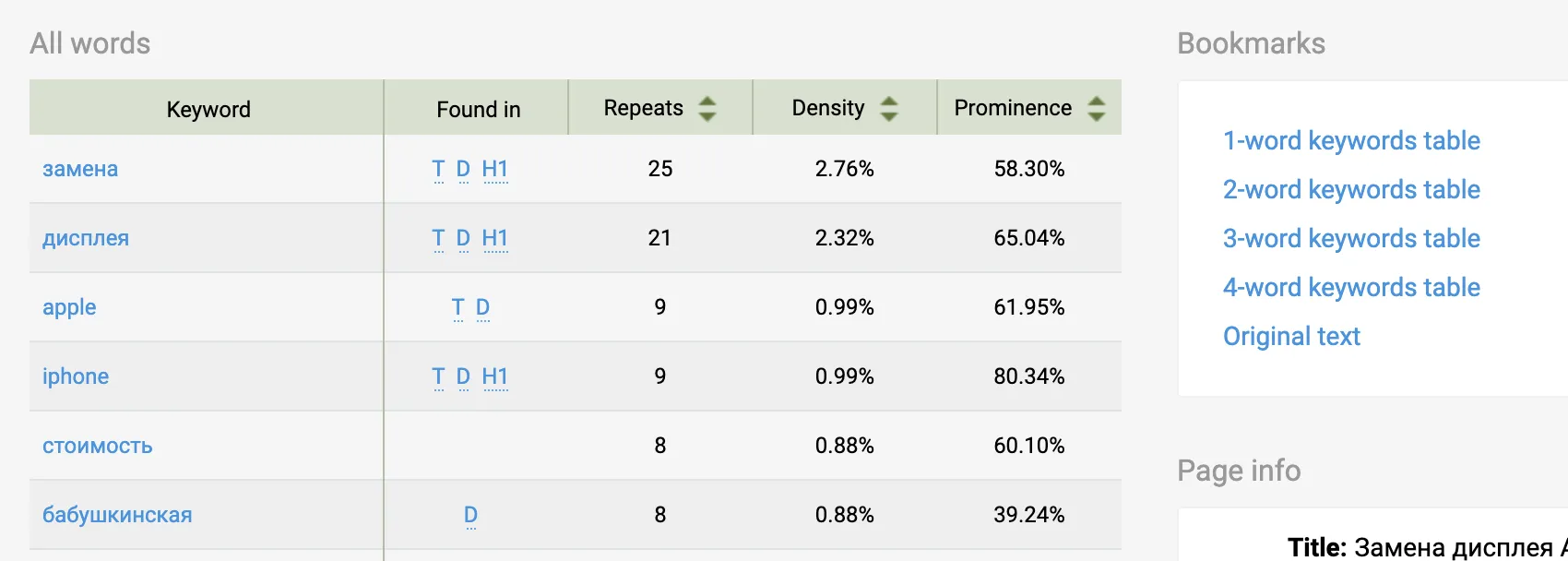
Then we work on semantics: helping search engine crawlers better understand the context through structured data (JSON-LD), logically arranged headings, and keyword targeting.
IndexNow
A relatively new tool (adopted by major search engines in 2021–2022) designed to speed up notifying search engines about changes in page status.
Given the business's region, the main source of organic traffic is expected to be the Russian search engine Yandex, which supports IndexNow.
For a domain recovered after a hijack, notification speed is critical: the faster a search engine learns about updates, the sooner it drops the old signals and rebuilds its view of the site.
Applying the protocol made it possible to cleanly automate synchronization with the client's CRM equipment stock, covered below.AI content
For each service page, and for each specific model, a separate page in Markdown format is generated — AI agents read them perfectly. Even though llms.txt is not yet fully recognized as a standard, it does its job excellently, as practice has shown.
I covered llms.txt in more detail in this article.
CRM integration
Stock updates
The business is dynamic: new smartphone models come out, old ones lose demand. Suppliers change, and equipment quality improves.
All of this leads to frequent stock updates, and the site has to stay on top of them.
This is where the core logic of the whole application lives.
The flow is as follows:
- An update happens in the CRM (a new/removed item, a price change)
- The event is processed on the server, updating the internal database
- Information about the changes goes straight to search engines via IndexNow
- The updated data automatically appears on the site — for people, search engine crawlers, and chatbot crawlers alike